

Brain Heart Infusion Agar, BHI A
A solid medium that includes the extremely nourishing infusions suggested for the culture of fastidious organisms.
Category Microbial Culture Media
Catalog Number: AS-1148
- Description
- Composition
- Quality Control
- Microbial Test Results
Brain Heart Infusion (BHI) Agar is a rich, non-selective culture medium supporting a vast array of microorganisms, including bacteria, fungi, and yeasts. Its nutrient-rich composition, derived from infusions of heart and brain tissue, combined with peptones, provides essential amino acids, vitamins, and carbon sources. The inclusion of dextrose offers energy, while disodium phosphate acts as a buffer. Sodium chloride maintains osmotic balance, and agar solidifies the medium.
BHI Agar excels in cultivating fastidious organisms such as streptococci, meningococci, and pneumococci, often challenging to grow on other media. Its applications extend to water testing and antimicrobial susceptibility testing. When supplemented with 10% sterile defibrinated blood, it becomes suitable for isolating Histoplasma capsulatum and other pathogenic fungi. By incorporating antibiotics like cycloheximide and chloramphenicol, BHI Agar can be transformed into a selective medium for specific fungi, inhibiting bacterial and saprophytic fungal contaminants.
While BHI Agar’s versatility is advantageous, its high dextrose content precludes its use for accurate hemolytic reactions. To prepare selective fungal media, antibiotics should be added to the sterilized and cooled medium. Additionally, BHI Agar plates can be employed for general susceptibility testing.
Storage
Keep the container at 15-30 °C and prepared medium at 2-8 °C.
| Composition | gr/L |
| Brain Heart Infusion | 3.5 |
| Enzymatic Digest of Animal Tissues | 14 |
| Pancreatic digest of Casein | 10 |
| Dextrose | 2 |
| Sodium Chloride | 5 |
| Disodium Phosphate | 2.5 |
| Agar | 15 |
| Final pH at 25°C | 7.4 ± 0.2 |
| Dehydrated Appearance | Beige, free-flowing, homogeneous. |
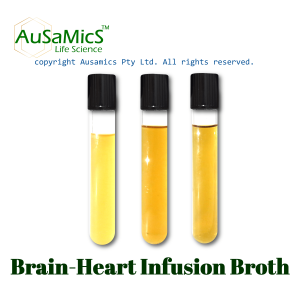
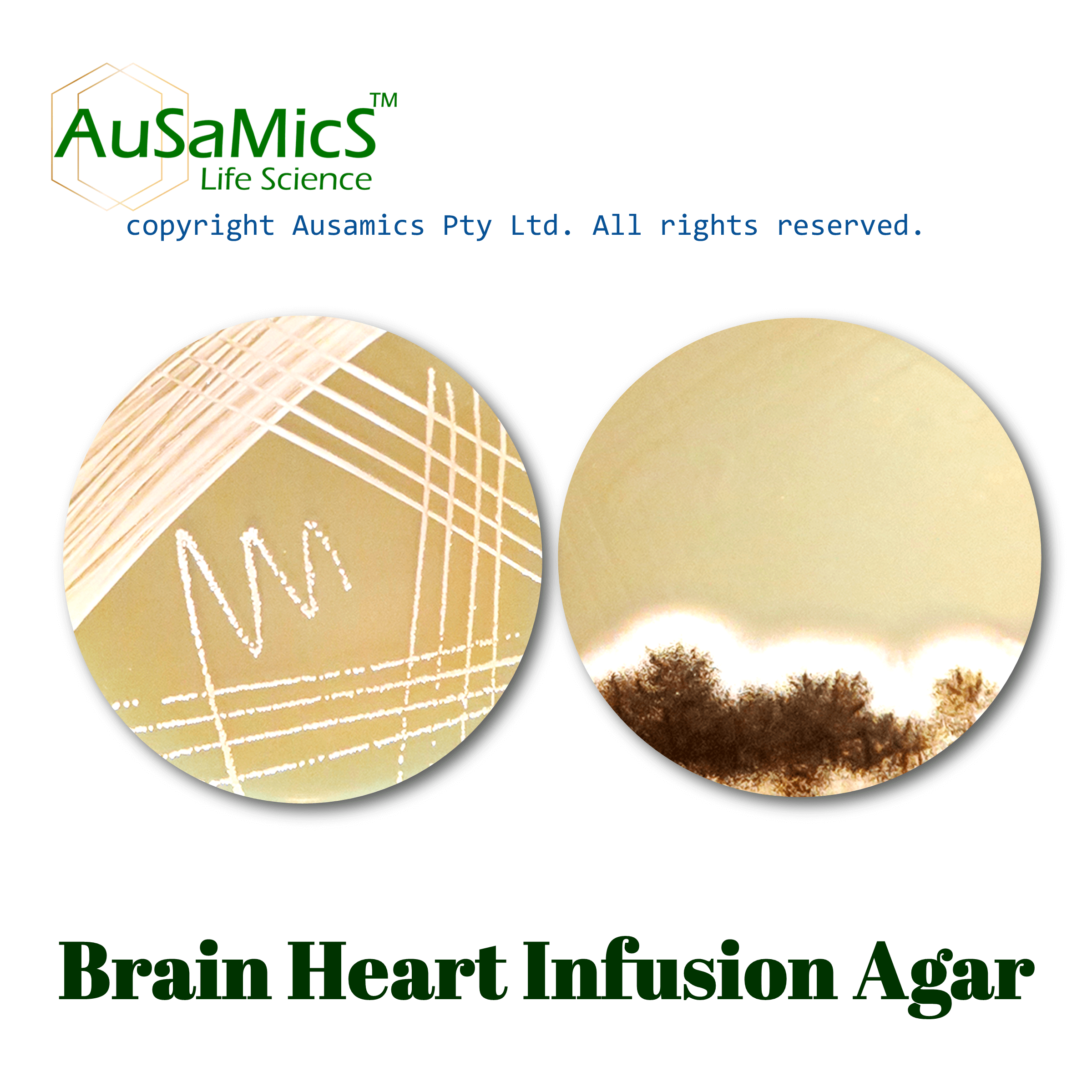
| Prepared Appearance | Light to medium amber, slightly opalescent to opalescent with a flocculent precipitate. |
| Reaction of 5.2 % Solution at 25°C | pH 7.4 ± 0.2 |
| The medium was made either plainly or with 5% defibrinated sheep blood (SB). A. brasiliensis was inoculated and incubated aerobically at 30 ± 2°C for 18–72 hours, or at 35 ± 2°C with or without 5–10% CO2. | |
| Organism (ATCC) | Recovery |
| Escherichia coli (25922) | Good |
| Aspergillus brasiliensis (niger) (16404) | Good |
| Staphylococcus aureus (25923) | Good |