


Lysine Iron Agar, LIA
For simultaneous detection of hydrogen sulfide production and lysine decarboxylase (LDC) to identify Enterobacteriaceae, especially Salmonella and Arizona.
Category Microbial Culture Media
Catalog Number: AS-1279
- Description
- Composition
- Quality Control
- Microbial Test Results
A differential media called lysine iron agar (LIA) is used to distinguish between Enterobacteriaceae strains based on their ability to produce hydrogen sulfide, lysine decarboxylate, and lysine deamination. Peptone, yeast extract, glucose, lysine, ferric ammonium citrate, sodium thiosulfate, and a pH indicator are all included in LIA, which was created by Edwards and Fife. To avoid masking lysine responses, lactose is excluded. Salmonella species, especially lactose-fermenting strains, can be distinguished from other intestinal bacteria because to the medium. A reddish-brown slant is produced by deamination of lysine, whereas an alkaline slant is produced by decarboxylation. The generation of hydrogen sulfide is indicated by a black precipitate.
Storage
Keep the container at 15-30 °C and prepared medium at 2-8 °C.
| Composition | (gr/L) |
| peptone from meat | 5 |
| Yeast extract | 3 |
| Glucose | 1 |
| L-Lysine | 10 |
| Sodium Thiosulphate | 0.04 |
| Ferric Ammonium Citrate | 0.5 |
| Bromocresol Purple | 0.02 |
| Agar | 12.5 |
| Final pH at 25°C | 6.7 ± 0.2 |
| Dehydrated Appearance | Beige to greenish beige, free flowing, homogeneous. |
| Reaction of 3.2% Solution at 25°C | pH 6.7 ± 0.2 |
| Prepared Appearance | Purple, slightly opalescent. |
| Incubate at 35±2 °C for 18 to 48 hours. | |||
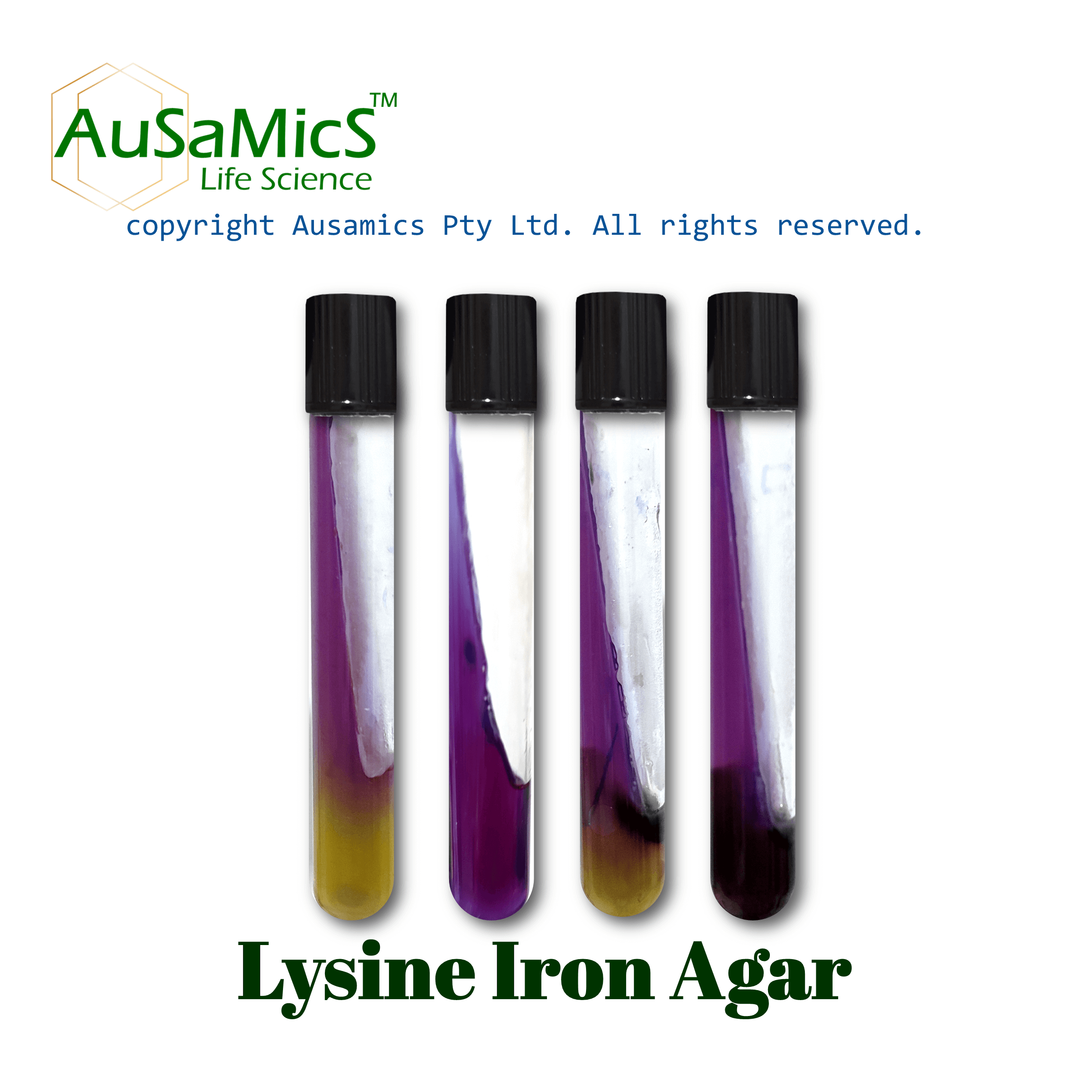
| Organism (ATCC) | Growth | Butt | Slant |
| Escherichia coli (25922) | Good/ Very Good | Yellow | Violet |
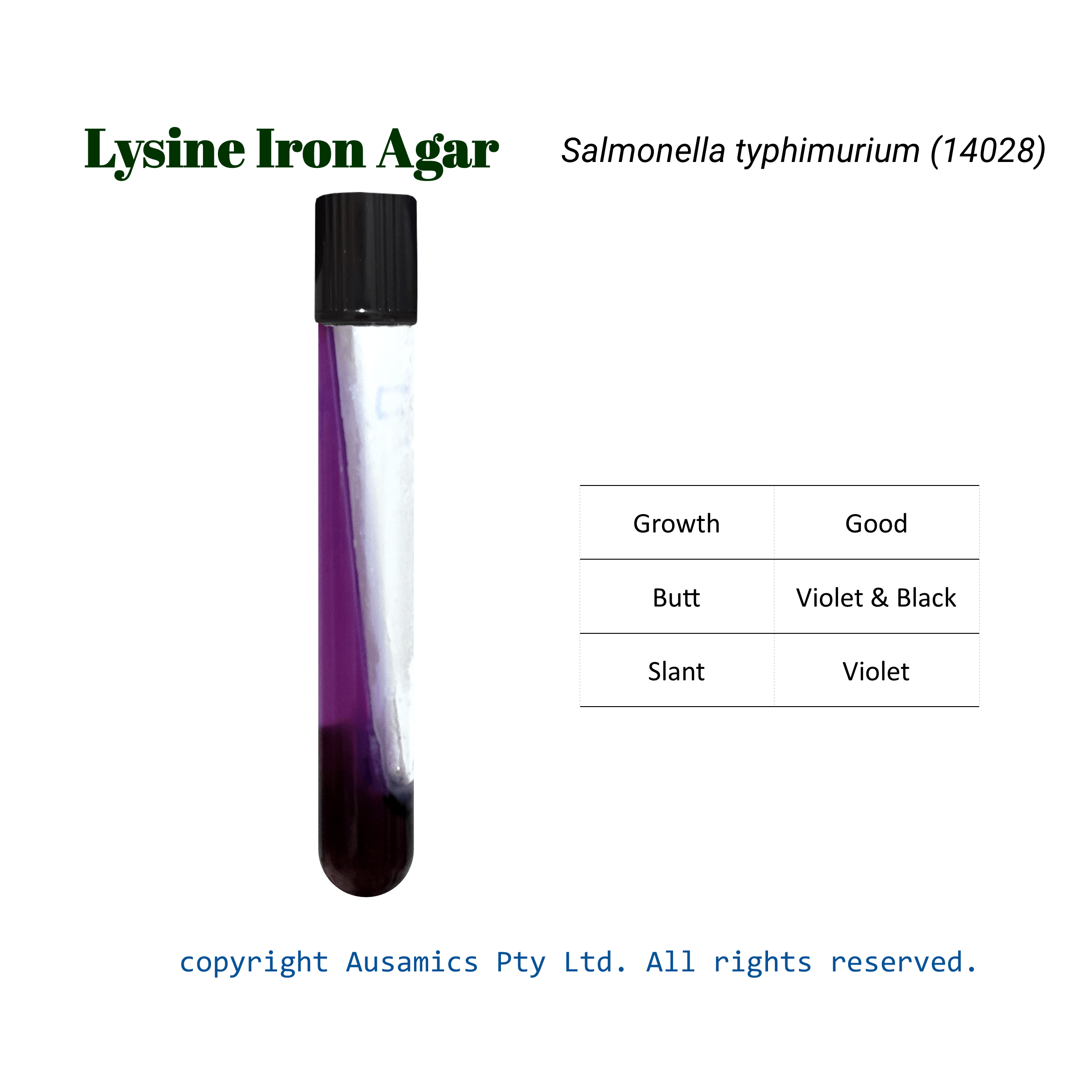
| Salmonella typhimurium (14028) | Good/ Very Good | Violet and Black | Violet |
| Citrobacter freundii (8090) | Good/ Very Good | Yellow and Black | Violet |
| Proteus mirabilis (29906) | Good/ Very Good | Yellow and Black | Reddish-Brown |