Sulfide Indole Motility Medium, SIM
Used to differentiate enteric bacilli based on sulfide production, indole formation and motility.
Category Microbial Culture Media
Catalog Number: AS-1347
- Description
- Composition
- Quality Control
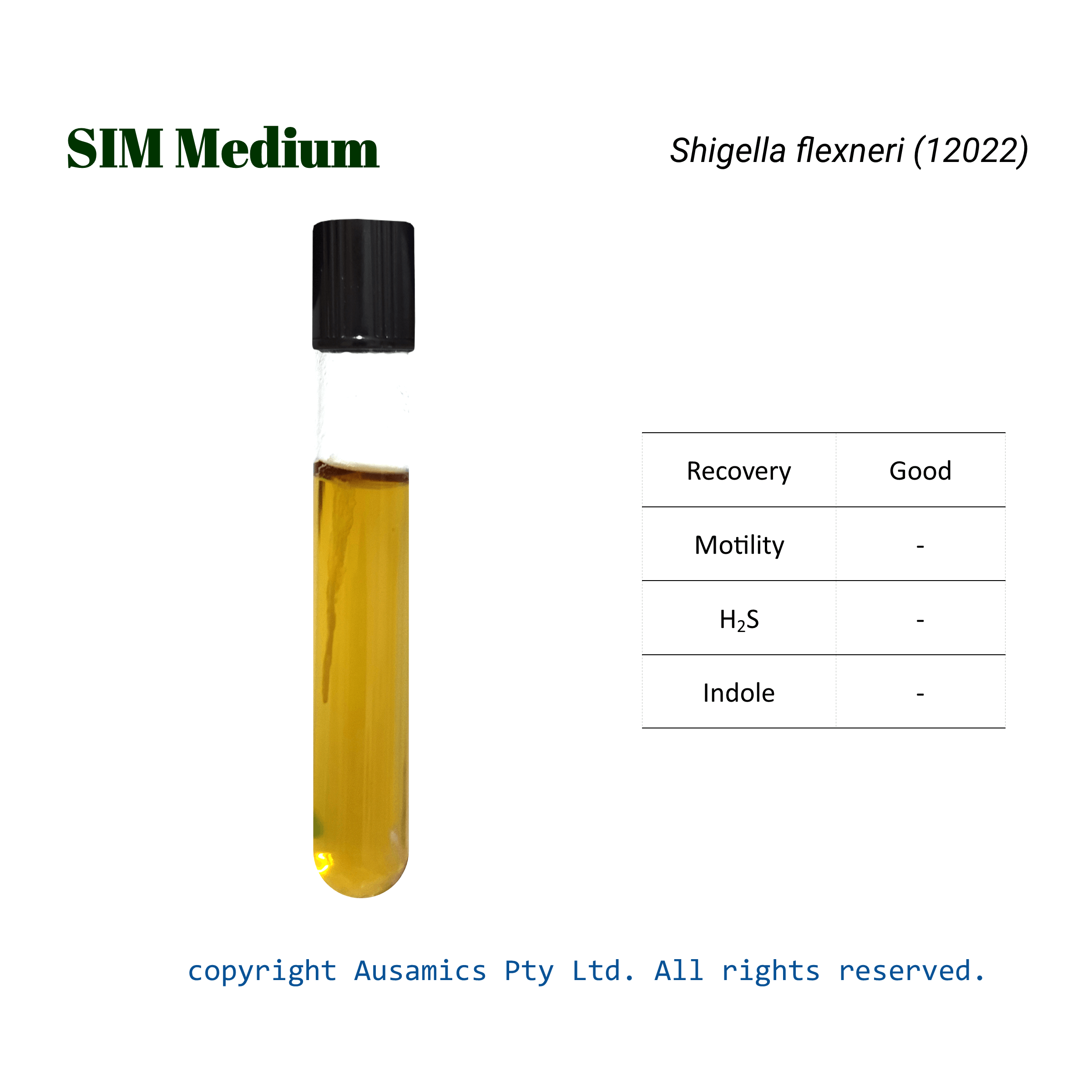
- Microbial Test Results
SIM (Sulfide Indole Motility) medium is a a differential culture medium which is used for distinguishing between Enterobacteriaceae members based on important biochemical characteristics: motility, indole production, and sulfide generation.
Peptones provide nitrogen to the medium, sodium thiosulfate provides sulfur, and ferric ammonium citrate serves as a sulfide production indicator. Agar at a low concentration produces a semi-solid consistency that makes motility visible.
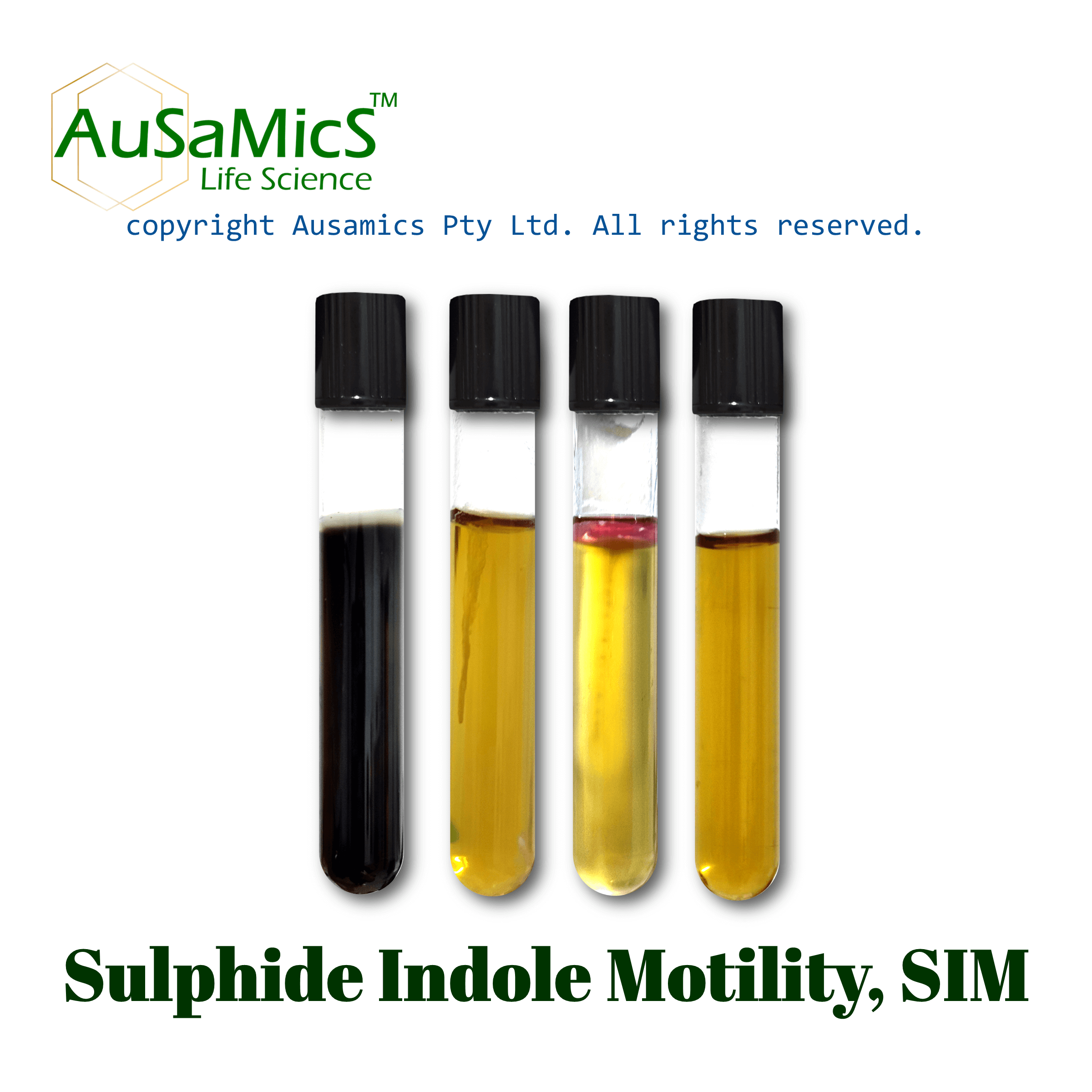
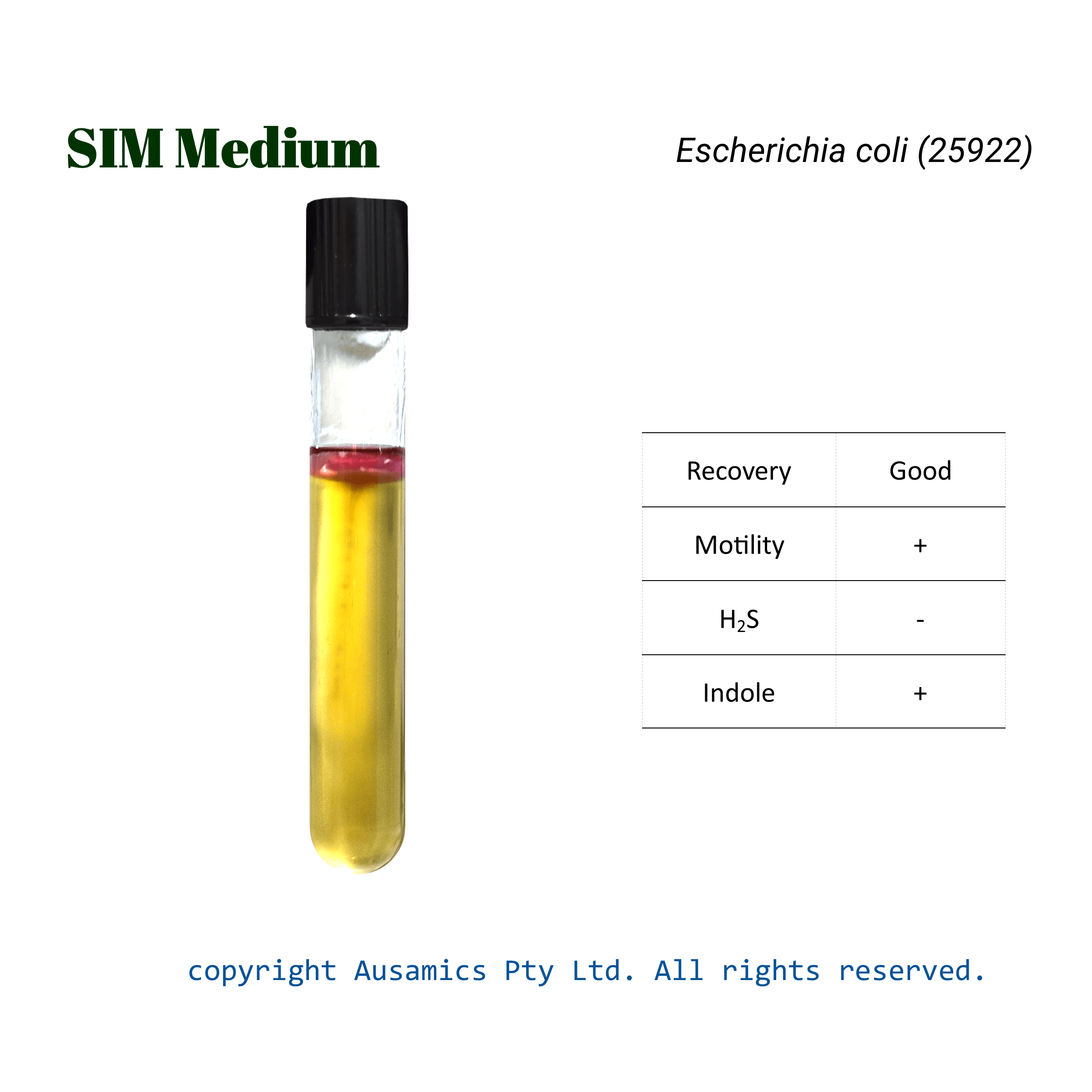
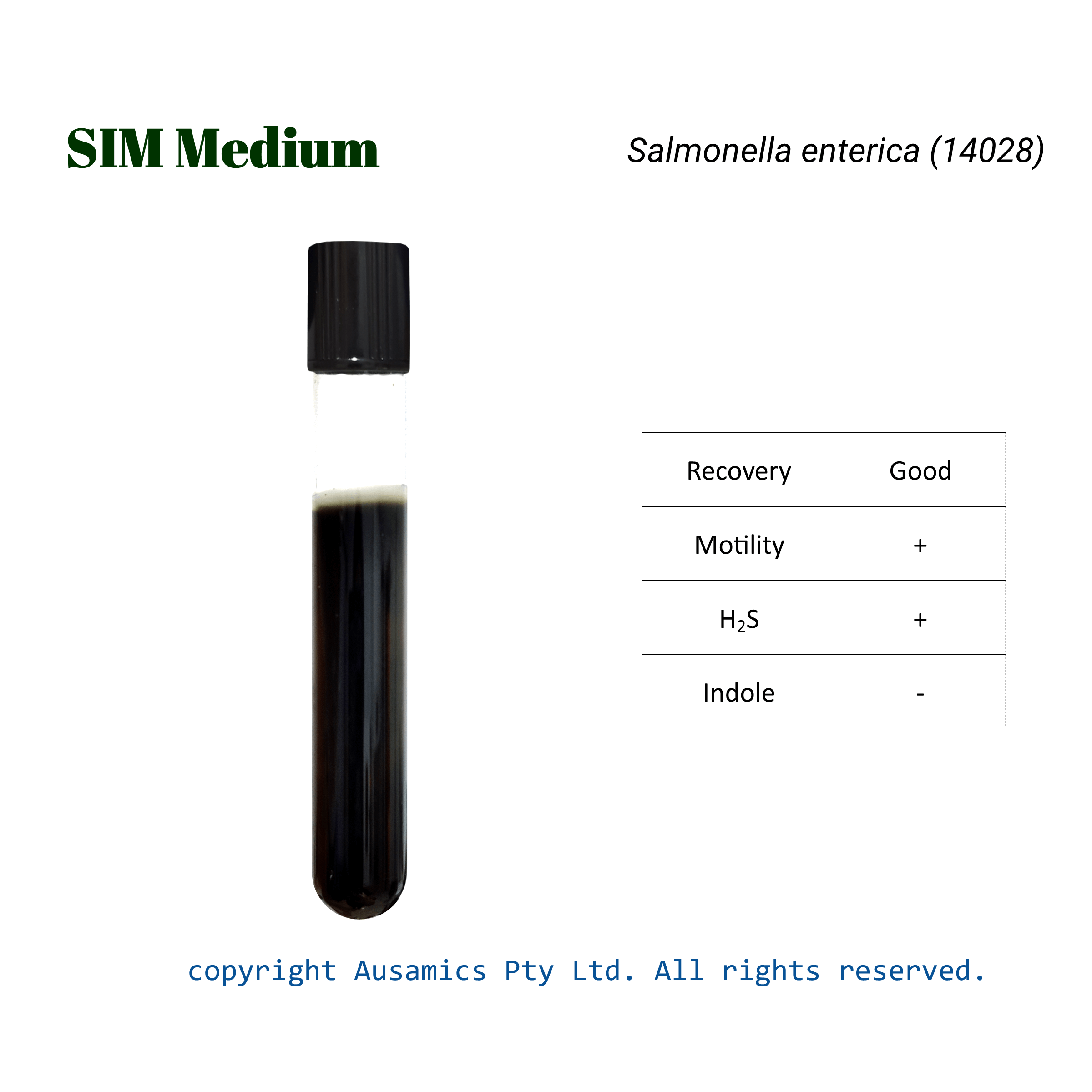
Black precipitates that are produced when hydrogen sulfide reacts with ferric ions are signs of sulfide production. The addition of Kovacs’ reagent, which turns red when indole is present, determines the amount of indole produced. Diffuse growth away from the inoculation line is indicative of motility.
Storage
Keep the container at 15-30 °C and prepared medium at 2-8 °C.
| Composition | gr/L |
| Enzymatic Digest of Casein | 20 |
| Enzymatic Digest of Animal Tissue | 6.1 |
| Ferric Ammonium Citrate | 0.2 |
| Sodium Thiosulfate | 0.2 |
| Agar | 3.5 |
| Final pH at 25°C | 7.3 ± 0.2 |
| Dehydrated Appearance | Fine, homogeneous, free of extraneous material. |
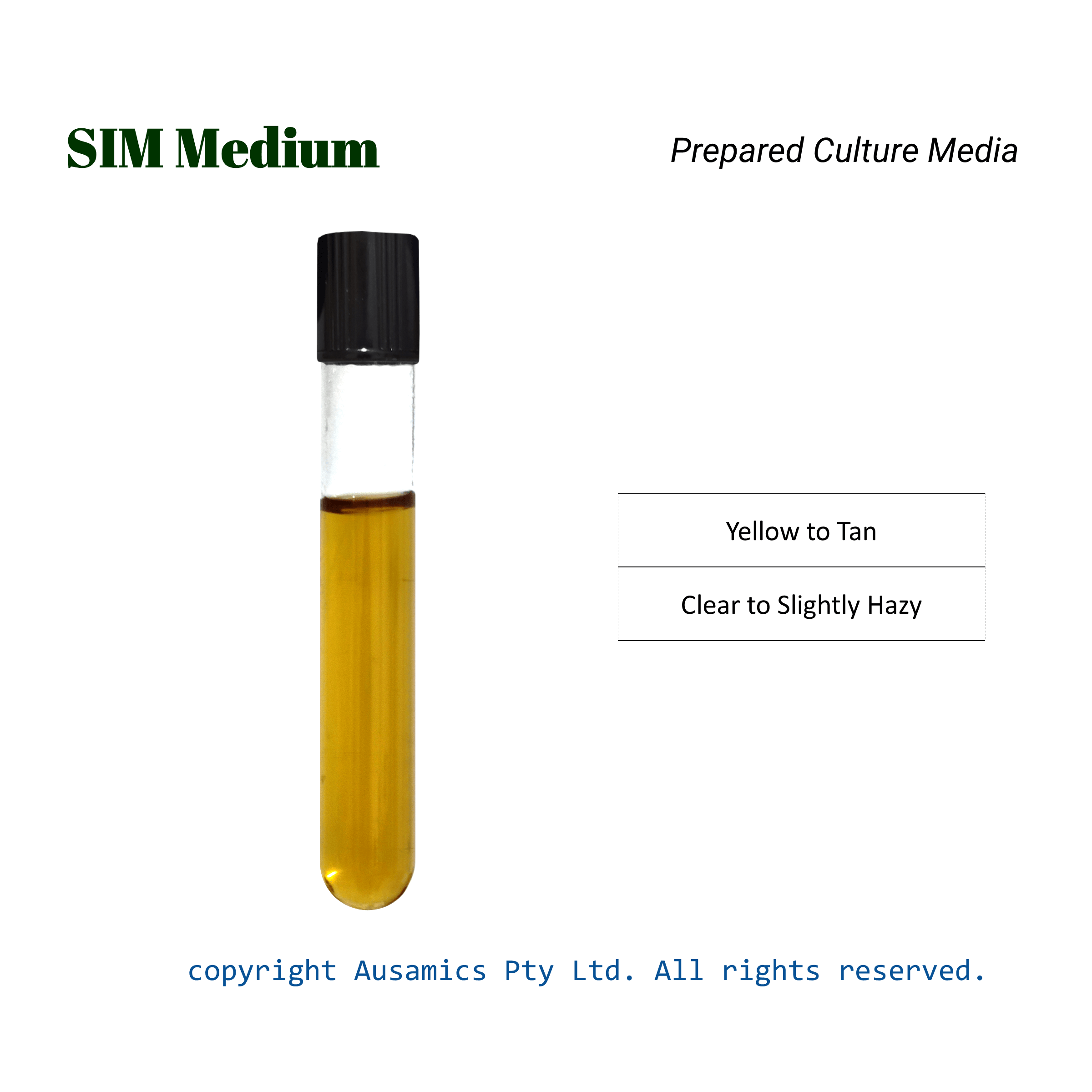
| Prepared Appearance | Light to medium, yellow to tan, clear to slightly hazy. |
| Reaction of 3.0% Solution at 25°C | pH 7.3 ± 0.2 |
| Inoculate using heavy inocula of fresh cultures and incubate at 35 ± 2°C for 18 to 24 hours. | ||||
| Organism (ATCC) | Recovery | Motility | H2S | Indole |
| Escherichia coli (25922) | Good | + | – | + |
| Salmonella enterica (13311) | Good | + | + | – |
| Shigella sonnei (9290) | Good | – | – | – |