Tryptone Water, TW
Used for cultivating non-fastidious organisms, studying carbohydrate fermentation patterns and performing the indole test.
Category Microbial Culture Media
Catalog Number: AS-1367
- Description
- Composition
- Quality Control
- Microbial Test Results
Tryptone Water is a particular liquid medium designed to qualitatively identify the formation of indole by microorganisms mainly those related to the Enterobacteriaceae family, particularly Escherichia coli.
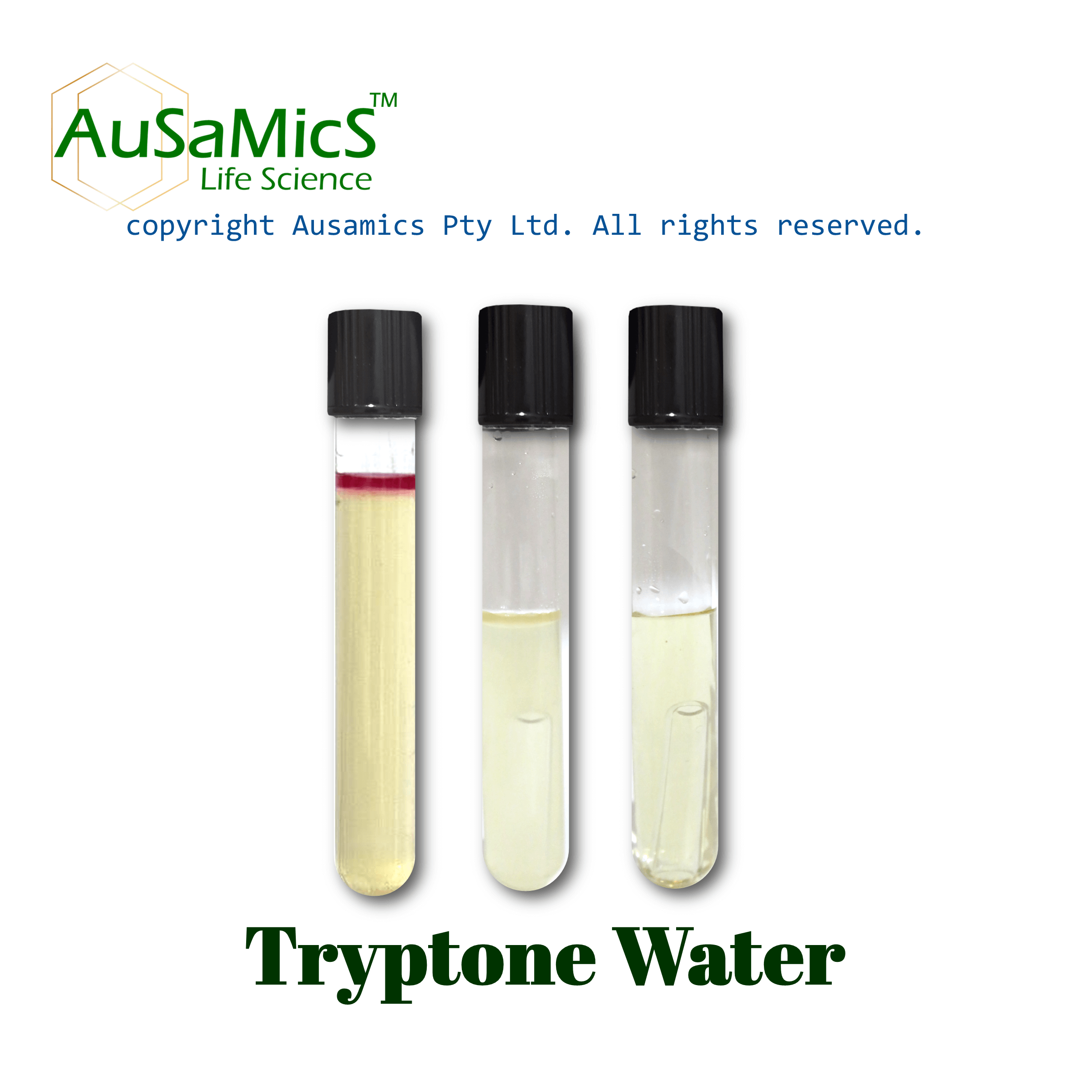
Peptone, the main component of the medium, is source of nitrogen and, more importantly, a source of tryptophan, the amino acid substrate required for the synthesis of indole. An inducible enzyme called tryptophanase is produced following an organismal inoculation. Tryptophan is hydrolyzed by this enzyme, producing ammonia, pyruvic acid, and indole as byproducts. One way to see the build-up of indole in the medium is to add Kovacs’ or Ehrlich’s reagent, which reacts with the indole to create a distinctive red color.
It is important to note that indole synthesis is not a confirmation test for E. coli, even if it is a presumptive test. To confirm the organism’s identity, additional biochemical and/or immunological characterization is necessary for positive indole results.
Tryptone Water is mostly employed in the bacteriological analysis of water, food, and clinical samples for screening purposes, in combination with other selective and differential media.
Storage
Keep the container at 15-30 °C and prepared medium at 2-8 °C.
| Composition | gr/L |
| Peptone | 10 |
| Sodium chloride | 5 |
| Final pH at 25°C | 7.3 ± 0.2 |
| Dehydrated Appearance | White to light beige, free flowing, homogeneous. |
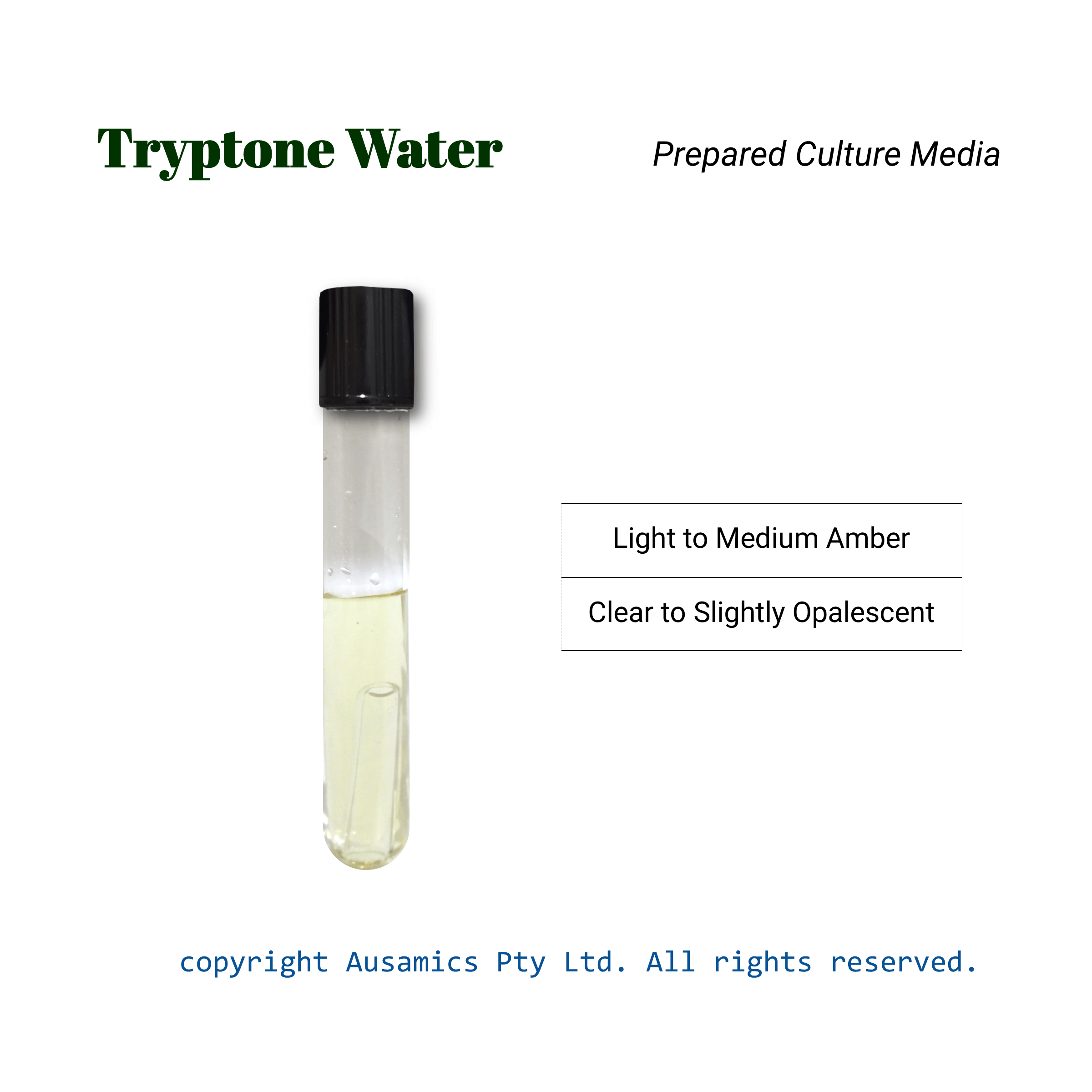
| Prepared Appearance | Light to medium amber, clear to slightly opalescent. |
| Reaction of 1.5% Solution at 25°C | pH 7.3 ± 0.2 |
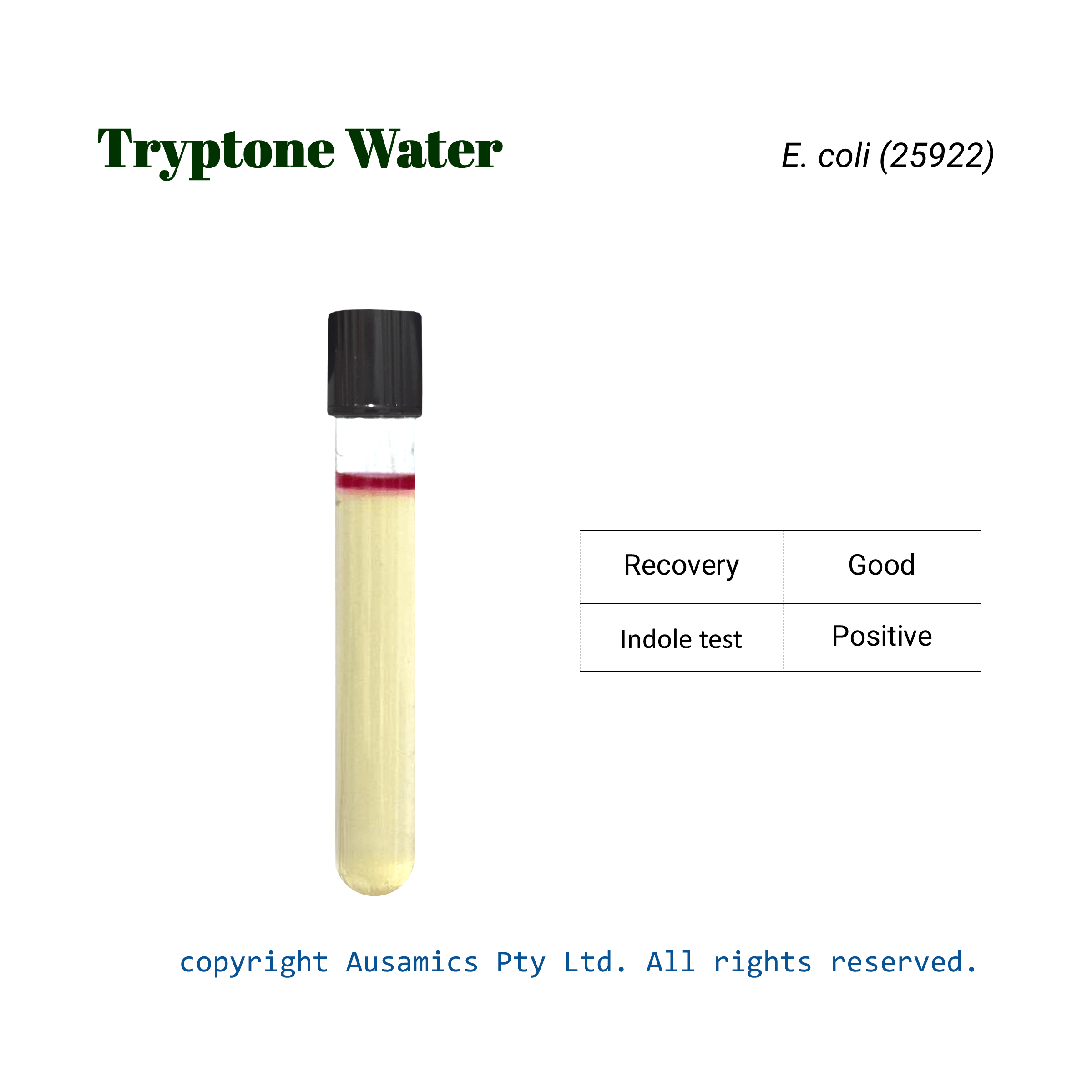
| Incubate at 35 ± 2 °C for 18 to 24 hours. For indole production test, add 0.5 ml indole reagent (Kovacs) to the test tubes. Formation a red ring indicates a positive indole test. | ||
| Organism (ATCC) | Recovery | Indole Production |
| Escherichia coli (25922) | Good | + |
| Enterobacter cloacae (13047) | Good | – |