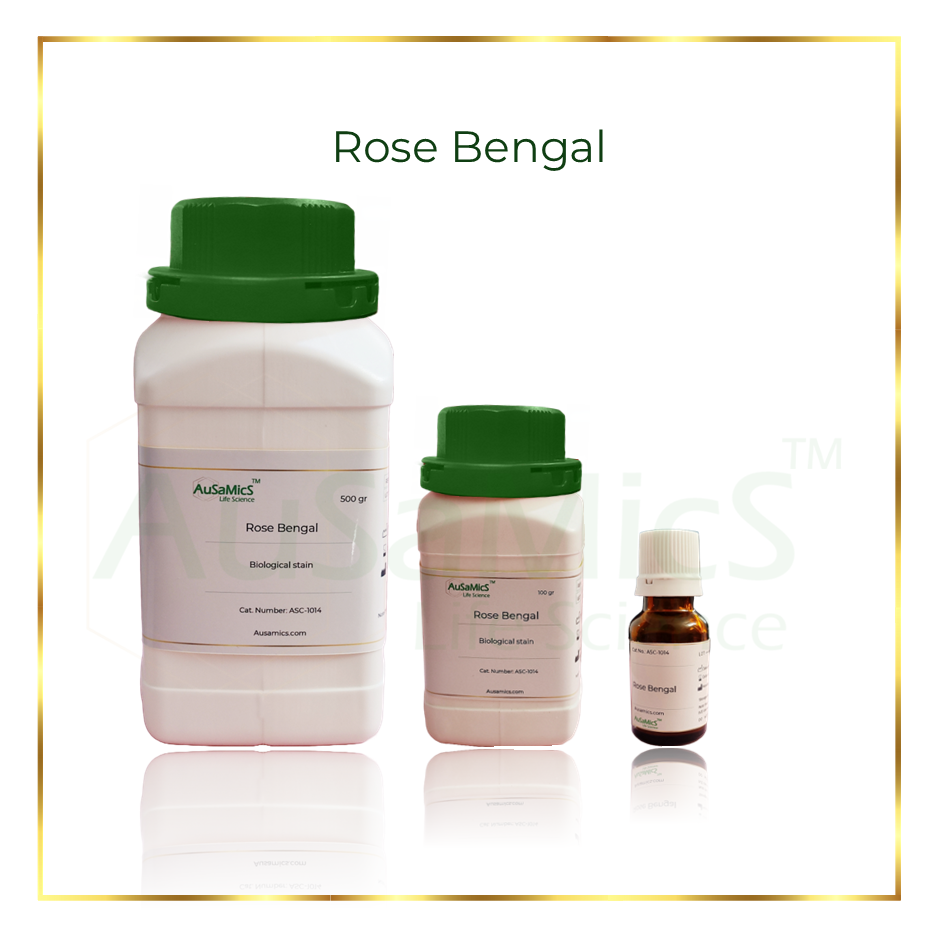
Rose Bengal Powder
Rose Bengal Powder, serving as a vital biological stain in microbiology and medical fields, aids in microbial identification, exhibits antimicrobial properties, and is crucial in ophthalmological diagnostics.
SKU
ASC-1014
Categories Big Sale, Dyes & Reagents
Catalog Number: ASC-1014
CAS Number: 632-69-9
MW: 1017.65 gr/mol
MF: C20H2Cl4I4Na2O5
- Description
- Product Information
Rose Bengal is used in yeast and molds culture media. This dye suppresses the growth of bacteria and also taken by yeasts and molds to help recognizing them easily.
Rose Bengal undergoes photo-degradation and produces toxic chemicals for fungi so it should keep away from light.
Rose Bengal has a red color but in an oxidation-reduction reaction with dinucleotide phosphate, it undergoes a color change from red to blue.
Rose Bengal has a high affinity for binding to bacterial DNA. This dye can bind to gram-positive bacterial cell wall so it can be used as a diagnostic agent. Cytotoxic effects of Rose Bengal on human leukemia HL-60 cells are proven.
| Cat. Number | ASC-1014 |
| CAS Number | 632-69-9 |
| MDL Number | MFCD00005043 |
| Color Index | 45440 |
| Pubchem | 310279775 |
| Molecular Weight | 1017.65 gr/mol |
| Molecular Formula | C20H2Cl4I4Na2O5 |
| Storage Temperature / Condition | 20 °C / Keep away from strong oxidizing agents. |
| Form and Color | Powder / Red to brown |
| Dye Content | ≥ 80 % |
| Solubility (0.1% in water) | Red to dark red solution |
| Solubility | Soluble in Water |
| Wavelength of Maximum Absorption | 540 – 550 nm (in water + 1ml 1% Na2CO3) |
| Absorptivity (1%/1cm) | ≥ 750 (λ max) |
| Loss on Drying | ≤ 10 % |