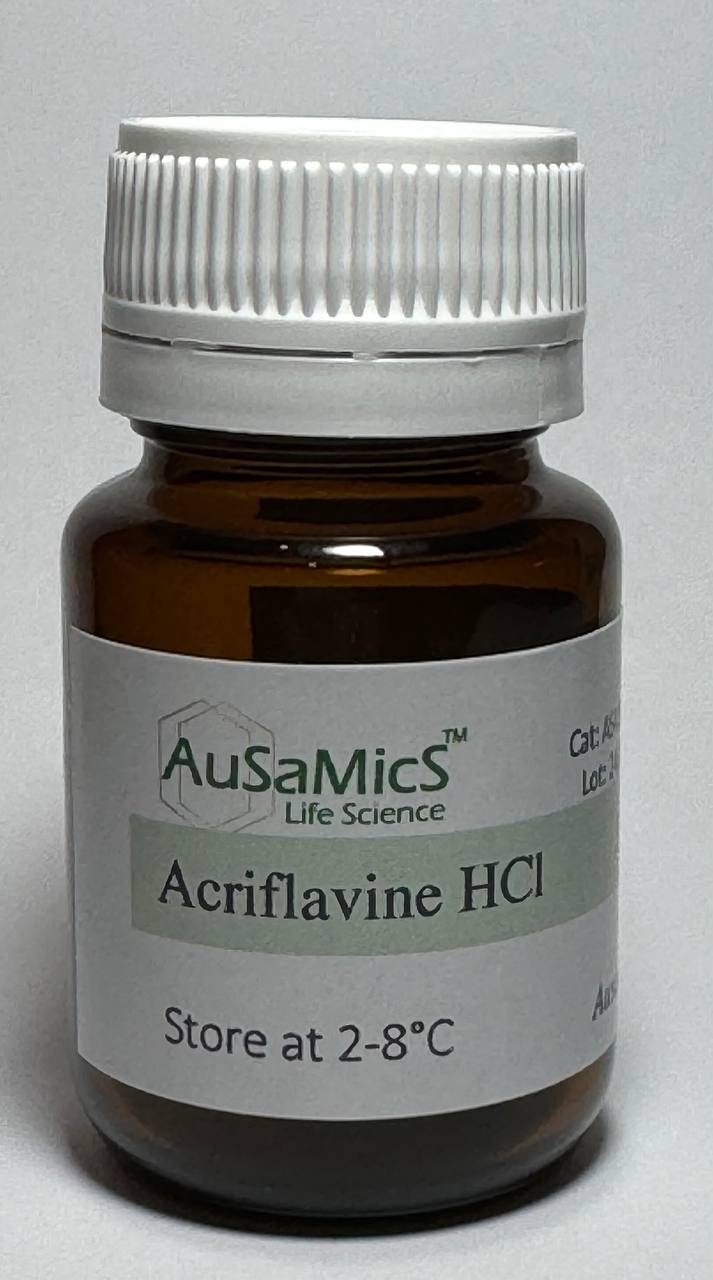
Catalog Number: AS-2037
CAS Number: 8063-24-9
MW: 541.90 g/mol
MF: C27H27Cl3 N6
- Description
- Product Information
Acriflavine hydrochloride is a member of the acridine class, which includes antiseptics and disinfectants. It has been demonstrated that acriflavine exhibits strong cytotoxic effects on mammalian cells while also exhibiting high levels of DNA binding activity.
It binds to nucleus DNA and prevents transcription and replication. By attaching itself to mitochondrial DNA, during mitosis, acriflavine hydrochloride prevents cell division.
The substance also affects how cells use energy, causing mitochondria to produce more lactate and less ATP. Moreover, acriflavine hydrochloride inhibits the production of reactive oxygen species, which may result in cellular damage.
Acriflavine hydrochloride has been utilized in confocal laser endomicroscopy to examine the mucosa’s crypt structure in living mice. By examining the acriflavine resistance, it has also been used in the selection of Neurospora strains.
The fluorescent dye acriflavine hydrochloride is used. It is applied topically as a contrast agent. Before microscopy, it is administered to tissues and mostly stains nuclei.
| Cat. Number | AS-2037 |
| CAS Number | 8063-24-9 |
| Additional CAS | 69235-50-3 |
| MDL Number | MFCD00069039 |
| PubChem | 310265807 |
| Molecular Weight | 541.90 g/mol |
| Molecular Formula | C27H27Cl3 N6 |
| Storage Temperature | +20°C |
| Form and Color | Dark Red, Powder |
| Residue on Ignition | ≤ 1.0% |
| Loss on Drying | ≤ 6.5% |
| Assay | 98.5 – 105.0 % (dried substance, % of C14H14N3Cl · HCl) |
| Synonym | 3,6-Diamino-10-methylacridinium chloride hydrochloride, Euflavine |